

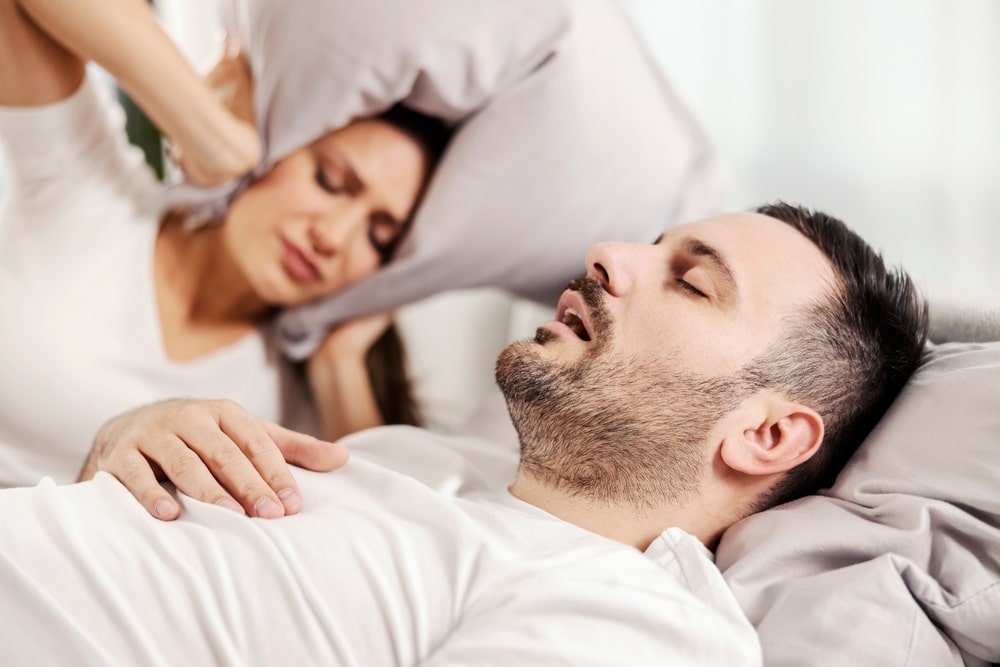
Why do adults snore?
- Poor muscle tone in the throat/tongue
- A long uvula or soft palate
- Obesity
- Sleeping position
- Alcohol consumption
- Stuffy or blocked nose
- Obstructive Sleep Apnea
As you age, snoring often becomes more disruptive and can affect the quality of sleep. A poor night’s sleep can cause daytime drowsiness and/or an inability to function normally.
What if my child snores?
If a child snores, this could be an indication of enlarged tonsils or adenoids. If this is the case, a tonsillectomy or adenoidectomy may be recommended. However, other issues could be causing a child’s snoring problem which could very well be dentally related.
Is snoring a serious health issue?
Although snoring by itself may not be a huge health concern, it may be correlated with other health issues that are more serious, like cardiovascular disease. In addition to this, studies show that roughly half of all heavy snorers suffer from obstructive sleep apnea. Sleep Apnea is a disorder that causes one or more episodes of pauses in breathing, lasting from a few seconds to several minutes. These episodes can happen more than 30 times in an hour. Sleep apnea is a serious and life-threatening condition.
If you snore, a sleep study should be administered to determine whether the condition is indeed sleep apnea. Once you have a diagnosis, you can take steps to not only alleviate the snoring but also to live a healthier, longer life, and to have a quality sleep which does not disturb you or your partner.
Do You Snore? Find Out Your Risk Factors for Sleep Apnea
What can I do to stop snoring?
Lifestyle changes will sometimes help eliminate snoring. Weight loss or refraining from alcohol use at bedtime will often correct the problem.
If you have made lifestyle changes and find no improvement, there are other options available to help you. A custom-made snore guard may help open the airway to correct the condition.